How to remove standing water from a crawl space safely
Standing water in your crawl space is a health hazard and a structural threat. Here is the safe, step-by-step way to remove it and dry the space in Indiana.
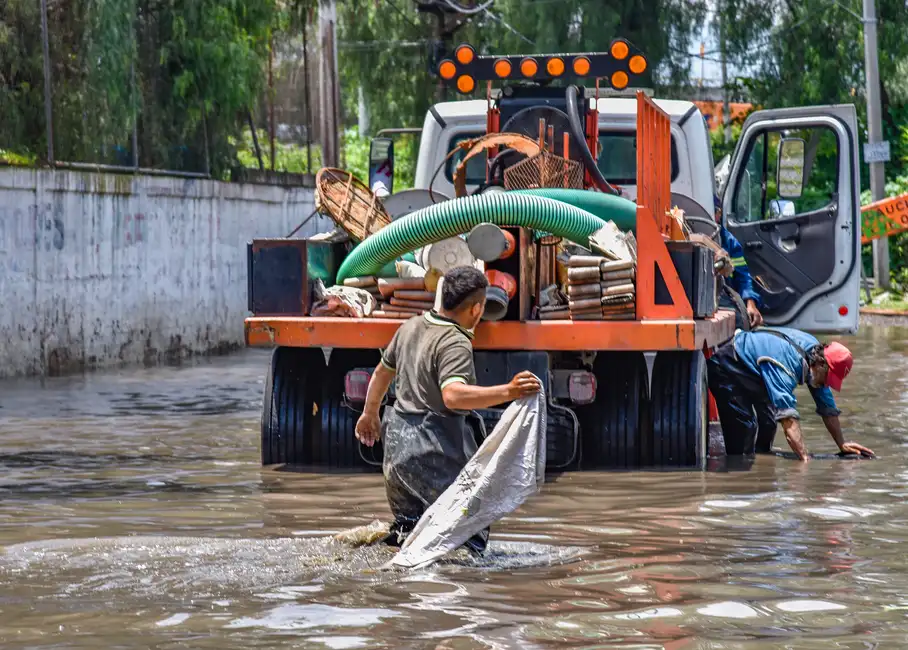
To remove standing water from a crawl space safely, you must first cut power to the space, wear waterproof boots and a respirator, then pump or wet-vac the water out in stages before drying the area with fans and a dehumidifier. Never enter a flooded crawl space without confirming the power is off and the water is not contaminated. This guide walks you through the full process, from the moment you spot the water to the day the space is dry again.
We are IN Water Remover Pros, and we handle Crawl Space Water Removal in Indiana every week. Here is how we do it, and how you can do it yourself if the situation is safe enough.
Why crawl space standing water is dangerous in Indiana
Crawl space standing water in Indiana is dangerous because it creates the perfect environment for mold, wood rot, and structural failure, and it can carry sewage or chemical contaminants that make the air in your home unsafe to breathe. Indiana's clay-heavy soils and high water tables mean water that gets into a crawl space often stays there for weeks unless it is actively removed.
Here is what happens when water sits under your floor:
- Mold growth starts in 24 to 48 hours. Mold spores are already present in every crawl space. They just need moisture. Once mold colonizes the floor joists and subfloor, you are looking at a remediation bill that starts around $1,500 and climbs fast.
- Wood rot weakens the structure. Floor joists, sill plates, and subfloor panels absorb moisture and begin to decay. A rotted sill plate can compromise the load-bearing capacity of your entire first floor.
- Indoor air quality drops. The stack effect pulls air from the crawl space up into your living space. That means mold spores, dust mite waste, and any contaminants in the water end up in the air your family breathes.
- Pests move in. Termites, carpenter ants, and rodents are all attracted to damp wood. Standing water is an open invitation.
We see this constantly in older Indianapolis neighborhoods where homes built before 1970 have crawl spaces with no vapor barrier and inadequate drainage. If you are dealing with water in a finished lower level instead, our Basement Water Removal in Indiana team handles that too.
How do I safely remove standing water from my crawl space?
To safely remove standing water from your crawl space, follow these steps in order: shut off power, put on protective gear, test the water source, pump the water out, remove saturated debris, and begin drying immediately. Skipping any step can put you at risk of electrocution, respiratory illness, or structural damage.
Step 1: Shut off the power
Find the breaker that controls your crawl space outlets, furnace, and any sump pump circuit. Turn it off. If you cannot identify the correct breaker, turn off the main. Water and electricity kill people every year in situations exactly like this. Do not skip this.
Step 2: Gear up before you go in
You need rubber boots that come up to your knee, nitrile gloves, eye protection, and an N95 or P100 respirator. Crawl space air can contain mold spores, sewage bacteria, and hydrogen sulfide gas. A dust mask is not enough. If the water smells like sewage, stop and call us.
Step 3: Identify the water source
Clean water from a burst pipe or roof leak is one thing. Gray water from a washing machine overflow is another. Black water from a sewage backup is a biohazard that requires professional handling. If you are not sure, assume the worst and call a pro. Our Sewage Water Removal in Indiana crew deals with contaminated crawl space water regularly.
Step 4: Pump the water out
Use a submersible utility pump or a wet/dry vacuum designed for water. Work from the deepest point outward. A standard wet/dry vac holds 10 to 16 gallons, so for anything more than an inch or two of water across a 1,000-square-foot crawl space, you will be making a lot of trips. A submersible pump moves 30 to 50 gallons per minute and is the better tool for anything deeper than 2 inches.
Pump the water to a drain or well away from the foundation. Do not pump it into the same area you just cleared.
Step 5: Remove saturated debris and insulation
Wet insulation, cardboard, and wood scraps hold moisture and block airflow. Bag them and get them out. If your crawl space has a vapor barrier that is holding water on top, pull it back, let the soil drain, and plan to replace it.
Step 6: Start drying immediately
Set up box fans and a commercial dehumidifier. Aim the fans to move air across the entire space. A residential dehumidifier will not cut it in a crawl space; you need a unit rated for at least 70 pints per day, and in Indiana's humid summers, you may need two.
Can I remove crawl space water myself in Indiana?
You can remove crawl space water yourself in Indiana if the water is clean, less than 2 inches deep, and you can safely access the space without encountering electrical hazards or sewage. If any of those conditions are not met, call a professional. The risk is not worth it.
Here is a quick decision guide:
- DIY is reasonable if: the water is from a clean source (rain, burst supply line), it is shallow, the power is off, and you have the right gear.
- Call a pro if: the water is deeper than a few inches, smells like sewage, has been sitting for more than 48 hours, or you see mold growth on the joists.
We also get called for Sump Pump Failure Water Removal in Indiana when a pump quits during a storm and the crawl space fills up overnight. That is a job for a truck-mounted extraction unit, not a shop vac.
How long does it take to dry a crawl space after water removal?
It takes 3 to 5 days to dry a crawl space after water removal under normal conditions, but in Indiana's humid spring and summer months, it can take 7 to 10 days without commercial drying equipment. The variables are airflow, outdoor humidity, and how much water the wood absorbed.
We use moisture meters to track progress. Wood moisture content needs to drop below 16% before we consider the space dry. Above that, mold can still grow. Here is what affects drying time:
- Outdoor humidity: Indiana summers run 70% to 90% relative humidity. Running fans that pull in outside air can actually make things worse. Use a dehumidifier that vents dry air into the space.
- Air movement: You need at least one air mover per 300 square feet of crawl space floor.
- Water depth and duration: Water that sat for a week soaks deeper into wood than water that was pumped out the same day.
If you are in an area like Carmel Water Removal territory where newer homes often have encapsulated crawl spaces, drying is faster because the vapor barrier limits moisture migration. Older homes in Indianapolis Water Removal neighborhoods with bare dirt floors take longer.
Common mistakes to avoid
The most common mistake we see is homeowners pumping the water out and then closing the crawl space up without drying it. That traps moisture and guarantees mold growth. Here are the others:
- Entering without cutting power. This is the one that kills people. Do not do it.
- Using a shop vac on deep water. A wet/dry vac is not a sump pump. You will burn it out and waste hours.
- Skipping the vapor barrier. Without a barrier, soil moisture wicks back up into the crawl space air. You will be back to square one within weeks.
- Ignoring the source. If you do not fix the grading, the downspout, or the failed sump pump, the water will return with the next storm.
- Not documenting for insurance. Take photos before you touch anything. Your adjuster will want them.
When to call a professional
Call a professional when the water is contaminated, deeper than a few inches, or has been sitting for more than two days. We handle crawl space water extraction safely with commercial pumps, HEPA filtration, and drying equipment that gets the space dry in days instead of weeks.
Our team also handles Flood Water Removal in Indiana when storms push water into crawl spaces and basements across the region. We extract the water, remove damaged materials, dry the structure, and treat for mold. One call and we take it from there.
Frequently Asked Questions
How do I safely remove standing water from my crawl space?
Shut off the power first, then put on rubber boots, gloves, eye protection, and a respirator. Pump or wet-vac the water out, remove saturated debris, and start drying with fans and a dehumidifier immediately. Never enter without confirming the power is off.
Is crawl space standing water dangerous in Indiana?
Yes. Standing water in an Indiana crawl space can cause mold growth within 24 to 48 hours, rot floor joists, and introduce contaminants into your indoor air. Indiana's clay soils and high water table make the problem worse because water does not drain away quickly.
Can I remove crawl space water myself in Indiana?
You can if the water is clean, shallow, and you can access the space safely. If the water is deeper than a few inches, smells like sewage, or has been sitting for more than 48 hours, call a professional. The health and safety risks are too high for DIY.
How long does it take to dry a crawl space after water removal?
Typically 3 to 5 days with proper equipment. In humid Indiana summers, it can take 7 to 10 days. Wood moisture content needs to drop below 16% before the space is considered dry. Use moisture meters to track progress.
Who does crawl space water removal in Indiana?
IN Water Remover Pros handles crawl space water removal across Indiana, including Indianapolis, Carmel, Fishers, and surrounding areas. We extract the water, dry the space, and treat for mold. Call (833) 640-1438 for same-day service.
Get help with Water Removal in Indiana
If your crawl space is flooded and you are not sure it is safe to handle yourself, call us. We will assess the situation, extract the water, and dry the space so you can stop worrying about mold and structural damage.
Call IN Water Remover Pros at (833) 640-1438. We serve homeowners across Indiana and we are ready to help.